


Welcome, my friend.
I hope you’re holding up. Living in a constant state of uncertainty takes a toll on the mind and body. Right now, the situation is as uncertain as can be.
People ask me, “What can I do to help?” and I’m never sure what to say. Sure, if you’ve got the energy and feel called to it, you can spread the word on social media as I outlined in “How You Can Help”. That can be emotionally draining, though, at least for me.
Today I want to talk about some lower-stress activities I’ve been doing on days when I don’t feel up to dealing with social media or engaging in the high-stakes political strategy surrounding the No Confidence Amendment. These activities help me feel connected to the work I’m doing with UTW. If you’ve been looking for a less-visible way to get involved, feel free to take inspiration.
Spreading the Word
Did you know the UTW site has printouts you can download to help you spread the word where you live? They’re designed by the same graphic design team that created the gorgeous UTW logo. They come in three sizes: a full-page flyer with tear-off strips for posting on a bulletin board or a telephone pole, a half-page leaflet you can hand out with no further explanation, and a business card with just the essential details.
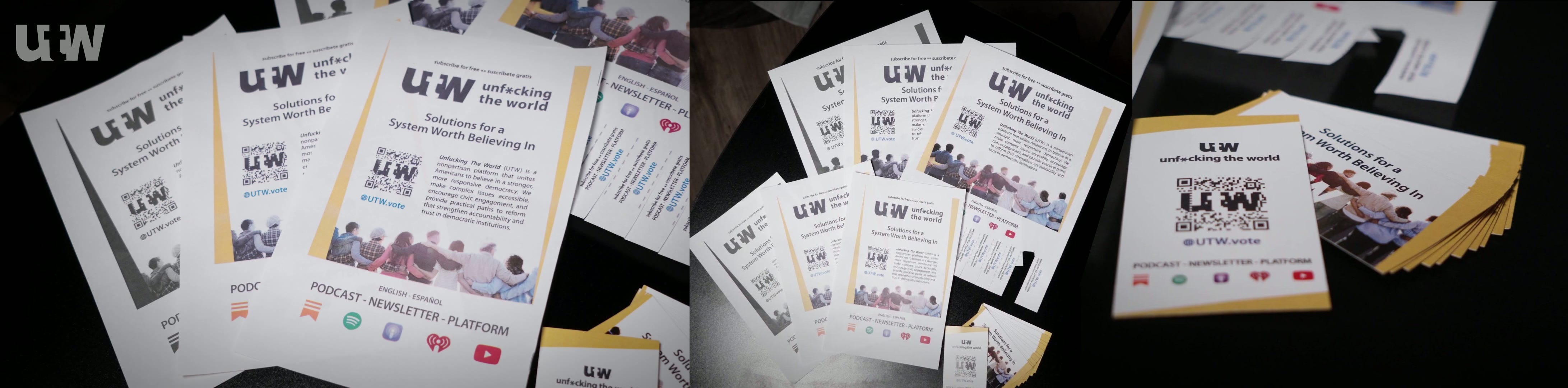
I like having props. Just having them available shows anyone I’m talking to that I’m not just making noises at them; I’ve already invested some of my own time (and probably money) before I even start speaking. If I hand someone a leaflet or a business card, or if someone tears a strip off a hanging flyer I posted, I’ve used up some of my limited resources on the message.
Economists call this “proof of stake.” The rest of us just call it “skin in the game.”
Each design comes in black-and-white and low-color versions for printing at home or on the cheap, along with full-color versions if you don’t have to worry about ink or toner. Staples charged me about $40 to print a box of 500 UTW business cards, and I doubt I’ll ever run out.
My own limited mobility means I mostly rely on the business cards. Any time a repairman or a contractor comes to my house, or someone comes to my door to talk, I’ll mention the podcast (or YouTube channel, or newsletter) Unfucking The World. If they’re curious, which they usually are, I hand them a business card. That way, I don’t even have to ask them to memorize the name.
(Quick note: if you take inspiration from this, please don’t do this with your Uber Eats driver or anyone whose job depends on visiting as many homes as possible in as little time as possible. If they want to talk about your phone bill, they have time to chat; if they want you to sign for a package, sign for the damn package!)
A friend of mine has a lot more time and energy than I do, though, and I’ve got a printer. Every couple of weeks or so, I print and cut another batch of flyers and leaflets, and she and her kids go around town handing them out and posting them up. It’s the same kind of thing I used to do with my mom when I was little.
Getting Involved
That’s all well and good for spreading the word about UTW, but at some point we need to do more than just “get more people on board,” right? The No Kings demonstrations were all well and good as a display of solidarity, but they didn’t actually accomplish anything.
(I suppose I should say, “they haven’t accomplished anything yet.” If No Confidence succeeds, it will be partly because the No Kings demonstrations made me realize how much America hates what’s going on. I’m more than happy to give them credit for that.)
A grassroots political movement has two criteria. The first is numbers: enough people must believe in the cause to make a difference. As hard as it is for me to believe, we’re succeeding on the numbers front. We’re showing steady growth, and as more people start listening, more are engaging by way of likes, comments, and re-shares. The algorithm is responding, showing UTW to more and more people.
The second criterion is participation. That means each of us needs to figure out how to become engaged with our political system, beyond just registering to vote. (You are registered to vote, yes? Apparently I wasn’t, because I didn’t realize I had to submit my registration every year. Fixed now.)
We have to do more than just vote, though. To have a voice in the system, we can’t just take multiple-choice tests. We need to become people who are comfortable speaking with politicians, telling them what matters to us, and explaining why it is so necessary.
If you’re anything like me, that’s a pretty fucking big ask.
I have to be honest with you, my friend. I am way out of my depth here. I don’t go to protests. I don’t call my representatives in Congress. I don’t do phone banks, write postcards, or help with political campaigns. I have no idea how to go from being an apolitical American to a political one, because I’ve never had a reason to before.
And of course, I’m trying to do this on top of putting out a weekly newsletter, podcast, and vlog. It’s not like I have a ton of energy to spare. How am I supposed to get involved in politics on top of everything else? Someone has to have written about this, right? “Political Engagement 101 for newbies who don’t have room for much more on their plate,” or something like that?
Political Engagement 101 (for newbies who don’t have room for much more on their plate)
Enter Amanda McCellon, an Oklahoma-based political organizer and all-around fantastic human being. She shares helpful tips every day on how regular people like you and me can get involved in the kind of politics that actually matters: local politics, the government of the city or town where you live.
So when I reached out to ask her what she’d recommend for getting involved as a beginner, she had the perfect article ready to share with me, titled “The Best Advice I Have for Getting Involved Locally (It’s Almost Annoyingly Simple)”. It was exactly what I needed.
“I get asked this question a lot,” she writes:
“What’s the one thing I should do if I want to get involved locally?”
People expect a complicated answer. A checklist. A toolkit. A ten-step plan. And every time, I give the same response - one that often surprises people because it sounds too simple to be real: Just show up. That’s it. That’s the advice.
Not “run for office tomorrow.” Not “become an expert in parliamentary procedure.” Not “have the perfect talking points.”
Just. Show. Up.
She’s right, of course: that is almost annoyingly simple.
So I went to my city’s website, and there was a link to the city council and a calendar of council meetings. I could find out when the next meeting was, go watch, and then write about the experience to share it with you.
I hit a brief snag in the plan when I learned that the council is in recess for the summer, but this is 2026. Council meetings are livestreamed and archived on YouTube, so I found the recording of the last session before the recess.
My friend, I wasn’t expecting to tell you the city council meeting was exciting, but I’ve watched pro wrestling shows that kept me less glued to the action than that one. (Admittedly not many; the WWE generally knows what it’s doing.)
A Classic Battle
It definitely felt like coming in at the last episode of a season. Once the opening credits—sorry, “roll call”—were over, the first order of business was to wrap up what had clearly been a very long story arc.
A beleaguered attorney stands before the council to argue for his client, a modest LLC that owns a mere pair of cannabis dispensaries, one of which is in this very city. He has clearly been given the runaround many times, but he needs the city council to intercede on their behalf before they can do business.
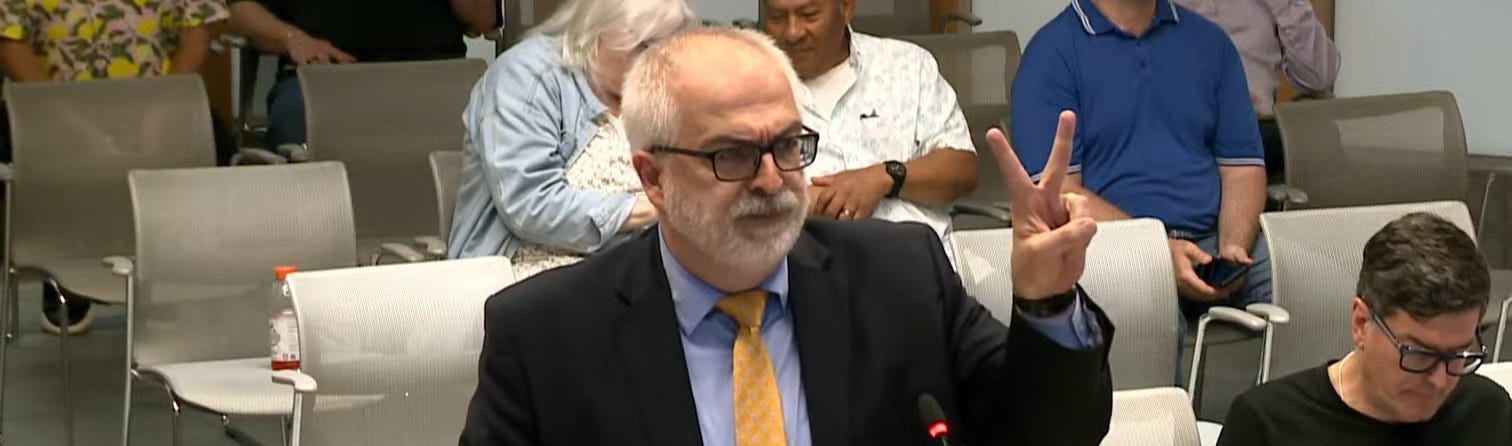
(I won’t go into the details of the legal drama; I know nothing about cannabis law, and I won’t pretend to! What I was watching were the relationships.)
The first councilor to speak, a talkative local with a thick accent, praises the attorney, arguing on his behalf because he’s known to the council and has always dealt fairly with them.
All the city officials who get up to speak—the building commissioner, the licensing board director, the city solicitor—bring in outside information to present to the council as trusted voices who will help the city make its decision. They reassure the council that yes, this is their bailiwick, and that yes, it is appropriate for them to make a decision on this right now.
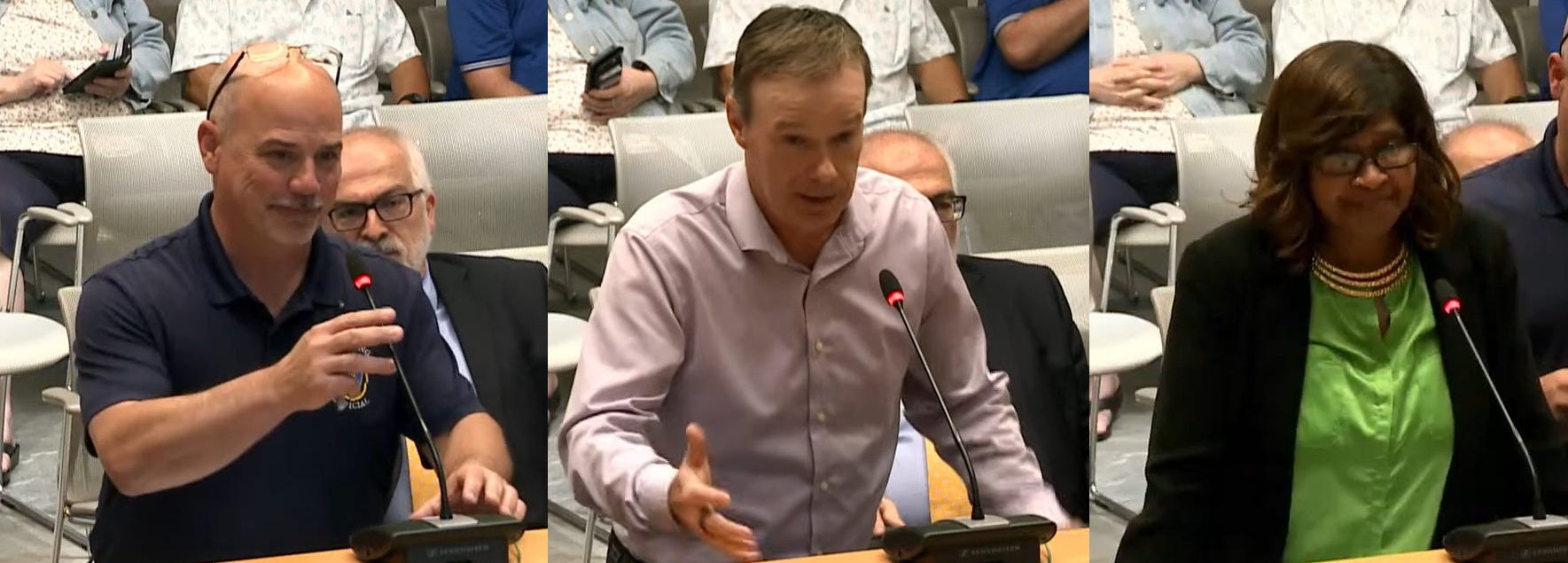
All of them—the attorney, the councilor, and the city officials—are clearly on the same side, which, of course, begs the question: who is in the other corner of the ring?
I recognize the challenger the instant he steps up to the podium to speak. An attorney from an out-of-town cannabis law firm, he objects to everything the city officials said, all but calling them incompetent, and he tells the city council that they don’t even have the authority to make the decision.
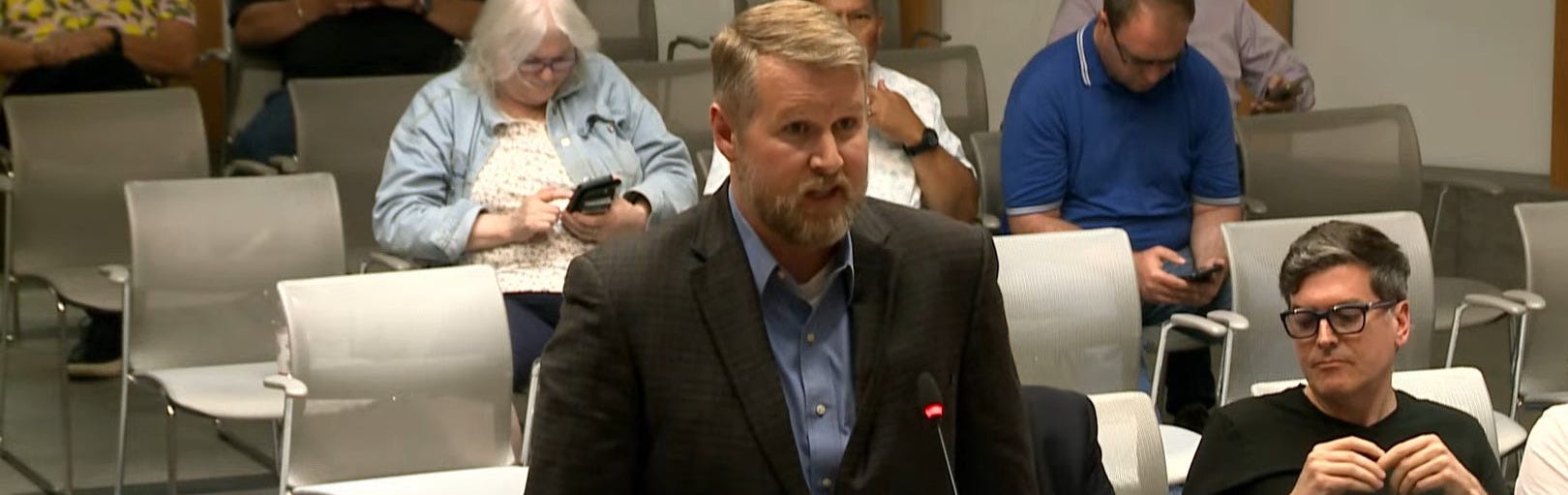
(In pro-wrestling fandom, we call this archetype the “foreign heel.” Insulting the locals is an easy way to make people angry at you.)
Then, in a stunning upset, another citizen rises to speak in protest: the owner of the other dispensary in town! The audience gasps. (I did, at least.) Is this poor, innocent LLC not so innocent as it seems? Has the local weed shop proprietor succumbed to the siren song of anticompetitive business practices?
He reads from a prepared statement, and he almost seems reluctant to do so. It quickly becomes apparent why: the entire core of his objection rests upon an assumption that had already been disproven earlier in the hearing. He made the attack, but his opponent wasn’t even there when it landed.
Then, in a clear bid for a next-season story arc, a man who looks like an enforcer, with hefty arm muscles and wearing a sleeveless top, steps up to very politely call out one of the city councilors and obliquely…threaten him? It’s unclear! He walks out, and everyone is too stunned for the moment to react.
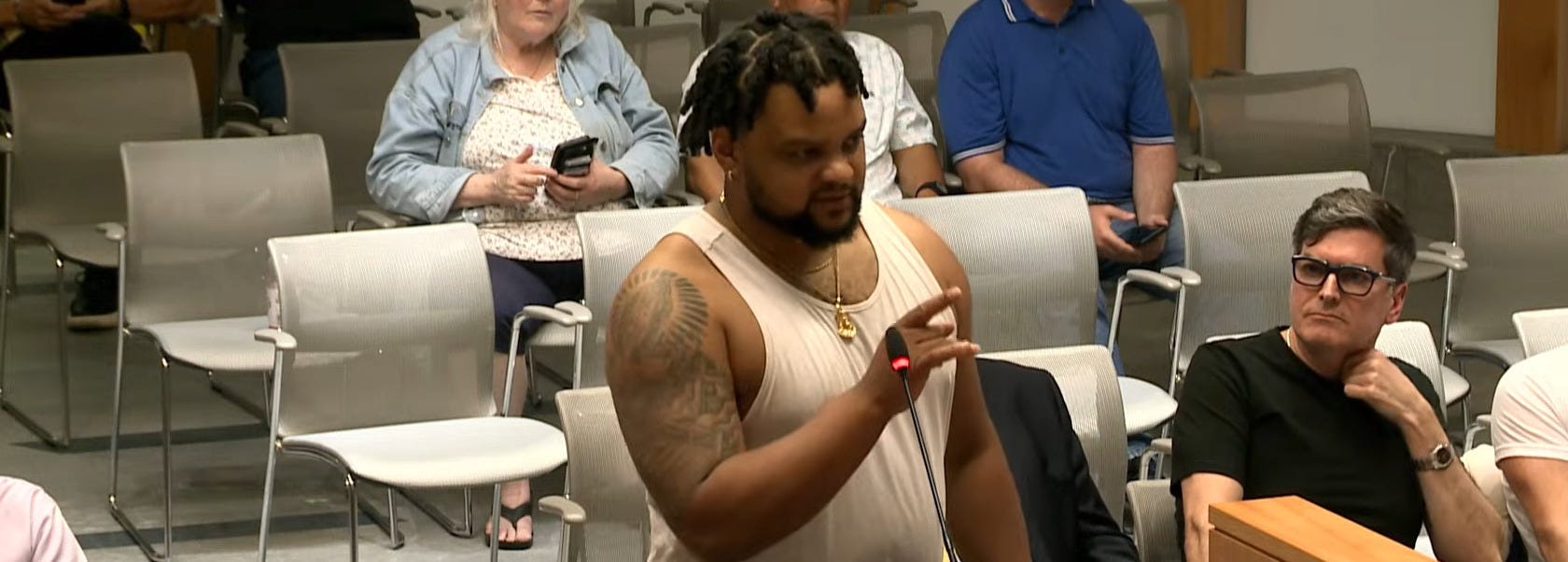
After that the council debates, and it turns out there are three sides, not two. The city officials repeat their plea for the council to do the right thing, the only thing that will let the city continue its work.
They do, eventually. Opinions shift suddenly when new information comes to light. One councilor advances a hypothetical that convinces two others to join her side. The councilor who had been dragging his heels the whole time recuses himself from the discussion, and the others quickly reach consensus.
The motion is approved; the foreign heel slinks away, defeated.
The Power of Stories
I’m presenting this by comparing it to a piece of scripted entertainment, which, of course, is a limited analogy. The hearing was a very important event in the lives of those involved, and its outcome was not predetermined. That’s not what I’m getting at.
The point is that we all carry these stories with us, these classic tales that have existed for millennia. Whether it’s pro-wrestling, soap operas, books, or video games, we all know versions of these narratives that humans have been crafting about one another for as long as we’ve told stories.
In the political world, this is what’s called “optics.” Knowing what kinds of stories people will tell about an event means understanding what they will think about it and what they will believe should happen next.
I want to write a different story with you, my friend. We all know the words; it’s the one where everyone says, “Well, fuck it, I guess it’s time to get up and do something, huh?” I want everyone to look around and see red and blue voters standing shoulder to shoulder, giving Washington the middle finger, and to decide that maybe 2026 is the time to get involved after all.
I know it’s a long shot, but the very fact that you’re reading this suggests it’s not impossible.
Next Time
I can’t do this on my own. Even four weeks of this is enough to tell me I’m running on zero margin; I barely have time to write, edit, translate, record, record, record, format, and post before it’s time to do it all again.
I’m going to take next week off from posting a full article, though I’ll make sure to have something for your inbox next Saturday. I’ll spend my time figuring out how to make this pace more sustainable. If you have any thoughts or suggestions, I’m all ears.
Just don’t ask me to spend less on candles.
As always, my friend, stay safe.
Thank you for coming along on this journey! Watching through the council meeting without skipping gave me a much better appreciation for just how it is that a government even works, when it does.

I don’t know if I would have found the courage to start getting involved locally without Amanda McCellon’s constant cheerleading. Check out her work on Substack and elsewhere, and consider a paid subscription to her newsletter if you want to support someone who is making real change in America, right now.
UTW is for Americans who love our country enough to argue with it. I welcome your uncertainty, your cynicism, and your skepticism in the comments; all that I ask is your good faith.
Share this with someone you know who has never been political, and stay safe.
–Danielle
Este artículo también esta disponible en español.
[https://youtu.be/o-M5UPQ6_CY]


